Many women invest a lot of time in their clothing and still wonder why the final outfit does not feel completely right.
The blouse fits.
The pants work.
The colors look good.
And still, something feels off.
Very often, the reason is the shoe.
Because in styling, shoes are not just a practical extra. They strongly influence the impact of a look. They can elongate it, ground it, make it more elegant, more interesting, or completely throw it off balance.
That is exactly why, in my style consultations, I never look at clothing alone. I always look at the whole picture. And shoes are often the most underestimated part of it.
Shoes are much more than a practical detail in styling.
They shape proportion, reinforce style, and often determine whether a look truly feels cohesive. In this article, you will learn why every shoe type naturally belongs to a certain style family and how you can adapt shoes through intentional details to match your own personal style.
Why Shoes Are So Important in Styling
A shoe always does several things at once in styling.
1. It affects proportion.
A shoe can visually lengthen the leg, shorten it, soften the look, or make it feel heavier.
2. It reinforces a style theme.
A look can feel classic, soft, modern, powerful, feminine, extravagant, or relaxed depending on the shoe.
3. it determines whether an outfit actually looks like You.
Many women choose shoes out of habit, not based on impact. That is often where the problem starts.
I am not a fan of rigid rules like:
You wear high heels with a skirt.
You wear sandals with a dress.
You wear loafers with a business look.
That is not how real style works.
I work differently. For me, a shoe always has to do two things.
It should support the proportion.
And it should fit the style type theme.
Only then does an outfit not just look correct, but truly cohesive.
Every Shoe Type Belongs Naturally to a Style Family and Can Still Adapt it
One very important point in style consulting is this:
Every shoe type naturally belongs to a certain style family.
A ballet flat usually has something delicate, refined, or classic about it.
A loafer often looks polished, clear, and smart.
A western boot has character, freedom, and individuality.
A pump often brings elegance, presence, or a defined femininity.
That does not mean a shoe can only ever be worn that way.
Because through details, almost every shoe type can be moved closer to Your own personal style type.
That is what makes styling so exciting.
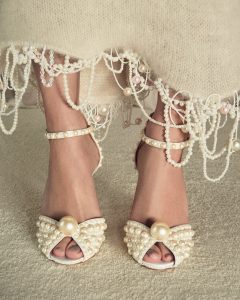
A simple sandal can instantly feel more romantic with a clipped-on flower.
With a gold buckle, the same sandal immediately feels more luxurious.
With a chunky sole or wider straps, it feels stronger.
In soft suede, it feels more natural.
With clean lines and a minimal design, it feels more modern.
That is a point many women underestimate.
It is not just about which shoe You wear.
It is also about how that shoe is designed and which details it includes.
That is why it is not enough to think only in categories like
ballet flats
pumps
boots
sandals
A much more interesting question is:
How is this shoe designed?
And does it really tell the style story that fits You?
It's not only about what shoe you wear
It’s also about how this shoe is designed and what details it features.
That’s why it’s not enough to think only in terms of categories like
- ballet flats
- pumps
- boots
- sandals
A much more interesting question is:
How is this shoe made?
And does it truly reflect the style that suits you?
My personal learning curve with ballet flats
Personally, I often look lost in ballet flats.
Not because ballet flats are bad in general.
But because they do not suit my style well.
Many ballet flats are very delicate.
The sole is often too thin.
The overall effect is often too soft.
And that takes something away from my look that I actually need.
In my styling, I need more strength, more presence, more substance.
More rebellion, even though I also have strong sensual elements in my style type.
When I wear a shoe that is too delicate, my whole look easily tips into something that feels off.
Then the outfit does not look stronger, but weaker.
Not clearer, but more random.
And that is exactly the insight I keep sharing with my clients:
A shoe can be beautiful and still not be your shoe.
Shoe Types and Their Style Families
Of course, no shoe type belongs to only one woman or one specific style. Still, there are typical tendencies. And those tendencies help You choose shoes more intentionally.
Pumps often belong to an elegant, feminine, or classic style family.
They can instantly elevate an outfit. At the same time, they only work really well when they suit the person and her style type.
A classic pump with a clean line looks elegant and competent.
A style with a delicate heel looks more feminine.
A block heel feels more stable and modern.
Gold details make it feel more luxurious.
Soft materials reduce harshness.
Pointed shapes often visually lengthen the leg more than rounded ones.
So high heels are not just dressy.
They always tell a specific style story too.
Pumps
Sandals can feel light, minimal, feminine, natural, or luxurious.
Sandals are one of the best examples of how strongly details change the character of a shoe.
A very simple sandal feels minimal and calm.
With a clipped-on flower, it instantly feels more romantic.
With a gold buckle, more luxurious.
With wider straps, stronger.
With a chunky sole, more modern.
With raffia, suede, or natural texture, often more relaxed and natural.
That is why it is worth looking not only at the basic shape, but at the whole design.
Sandals
Ballet flats often look refined, calm, classic, understated, or romantic.
They usually work well with style themes that are softer, more delicate, more feminine, or more classic.
What matters here is the specific design.
A more pointed shape looks more grown-up.
A detail like a bow, flower, or shine can make the shoe even more romantic.
A minimal ballet flat in smooth leather feels more classic.
A style with a stronger sole can add more substance.
If your style needs more strength, more drama, or more expression, a classic ballet flat can quickly feel too sweet or too tame.
Ballet Flats
Loafers
Loafers usually bring structure, professionalism, and clarity.
They often work very well for smart, classic, urban, or business-oriented style themes. They can feel calm and high quality, but also modern and cool.
Again, the details make the difference.
A simple loafer feels clear and minimal.
A loafer with a gold buckle feels more luxurious.
A style with a heavier sole feels more powerful and fashion-forward.
Soft suede makes it feel more relaxed and natural.
Laced shoes and Oxfords usually have more presence.
They look structured, intelligent, full of character, and often a little androgynous.
They are especially well suited for style themes that are meant to communicate clarity, competence, and independence.
With fine perforation or glossy leather, they feel more classic.
With a chunky sole or bold shape, they feel stronger and more modern.
With softer materials, they can feel more approachable and relaxed.
Laced Shoes and Oxfords
Western Boots
Western boots bring energy.
They feel free, bold, independent, and often self-assured.
They work well for style types that want to look strong in character rather than overly polished.
Again, a lot can be adjusted.
A simple western boot in dark leather feels clearer and more grown-up.
Embroidery or special stitching makes it more playful.
A more pointed shape feels more elegant.
A chunkier sole or stiffer leather adds more strength.
Why strict shoe rules often don't work
Many Women Look for Simple Answers
Which shoes go with a skirt?
Which shoes go with a dress?
Which shoes go with wide-leg pants?
Which shoes make my legs look longer?
These questions make sense.
But they are too limited.
Because the same skirt can look elegant with a pump, more interesting with a western boot, more polished with a loafer, and softer with a sandal.
So the question is not just:
What goes with the garment
The better questions are:
What goes with You
What balances Your figure
Does it support Your style type
And does it create the impact You want to show
That is exactly why I am not a fan of blanket fashion rules.
They ignore the woman who is actually wearing the look.
How Shoes Affect Proportion
A shoe is not just a style element.
It also shapes the silhouette.
This happens through several things at once:
- The shape of the toe
- The thickness of the sole
- The height and type of heel
- The position of the shaft
- The color
- The material
- The visual weight or lightness
A delicate shoe can make a look feel lighter.
A heavy shoe can ground and stabilize it.
A shoe in the same color of the pants can make the leg look longer.
A strong contrast can break the line.
A lower-cut vamp creates a different effect than a more closed shoe.
That is why the question: “Which shoes make legs look longer?” cannot be answered in a general way.
What elongates always depends on how it works together with Your figure, Your clothing, and Your style.
Typical Mistakes Women Make When Choosing Shoes
In practice, I keep seeing similar mistakes.
1.The shoe is neutral, but not harmonious.
Many women reach for the supposedly safe option. It may look unobtrusive, but often also lifeless.
2.The shoe fits the occasion, but not the personality.
Business-appropriate does not automatically mean right.
Elegant does not automatically mean good.
Wearable does not automatically mean stylish for you.
3.The shoe ignores proportion.
A style can look good on the foot and still throw the whole outfit out of visual balance.
4.The shoe type basically fits, but the details tell the wrong style story.
This is exactly where many women lose a huge amount of impact.
How to Find Shoes That Truly Fit Your Style
If You want to choose shoes more intentionally, these questions will help:
- Does this shoe support my proportion?
- Does its basic energy fit my style family?
- Do the details really fit my style type?
- Do I feel stronger or weaker in this shoe?
- Does my outfit look clearer or more random with it?
These questions will take You much further than general fashion rules.
Because style is not created by copying.
Style is created through alignment.
Shoes as a Quiet Success Factor in Styling
This topic is especially important for female entrepreneurs.
Because impact never comes from clothing alone.
It comes from the interaction of all elements.
And shoes are often the point where it becomes clear whether a look feels elevated, intentional, and confident or unfinished and accidental.
A cohesive shoe says:
- I know my style.
- I make intentional decisions
- I show up with clarity.
And people can feel that.
That is why the right shoe is not just a matter of taste.
It is part of Your presence.
Conclusion
When it comes to styling, shoes are no minor detail.
They influence proportions.
They amplify your style.
They often alter the overall impact of an outfit far more than many people realize.
Naturally, every type of shoe belongs to a specific style family.
Yet, at the same time—through its shape, material, details, and craftsmanship—almost any shoe can be steered to align with your own personal style type.
That is precisely where the art lies: not in simply wearing *any* shoe…
…but in choosing the shoe that flatters your figure, brings your core style theme to life, and lends your look a sense of true clarity.
For an outfit is only truly powerful when every element comes together in perfect harmony.
If you no longer want to have to guess which shoes will make you look stronger, more cohesive, and more polished, then a personalized style consultation—such as “Elevated Style Confidence”—is the fastest path for you.
Together, we will explore exactly which shoe types, shapes, materials, and details truly complement your figure, your natural presence, and your personal style.
For true clarity is not born of rigid rules, but of a bespoke style concept.
Get your first complimentary style feedback during a Style Call.